WATCH ANGELS X ALPINA STARTIMER PILOT IFR CHRONOGRAPH
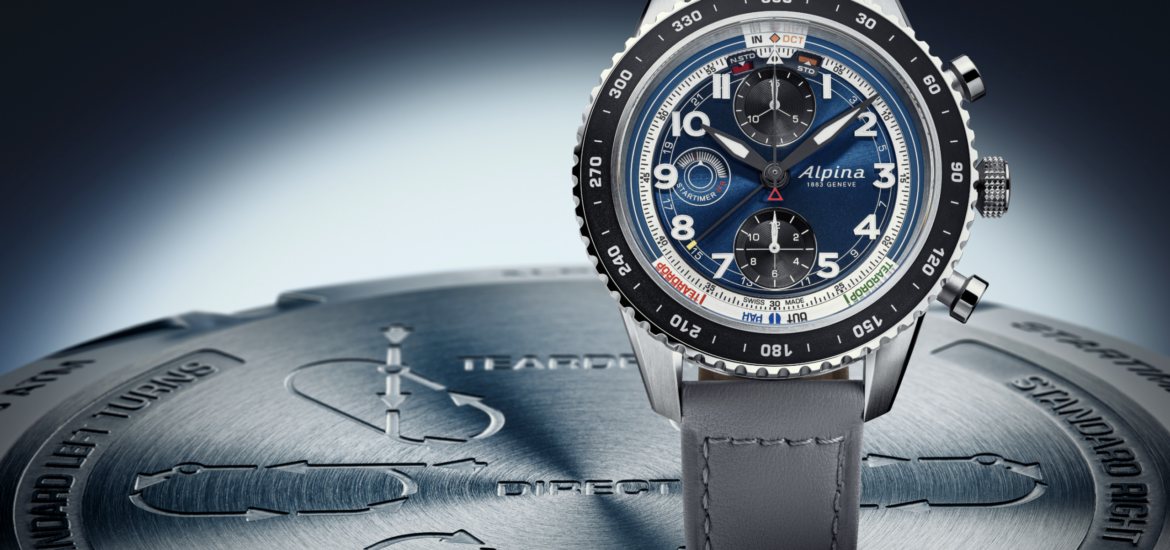
A new horological function for a complete and fully operational pilot’s watch.
Watch Angels and Alpina are proud to unveil a world first devoted to one of the most critical IFR flight phases. For decades, pilots’ watches have paid tribute to the world of aviation without really providing any support for pilots’ operational decisions but now the Startimer Pilot IFR Chronograph changes all that. The collaboration timepiece introduces a new, fully mechanical horological function designed to correctly fly a holding pattern a moment in which accuracy and discipline are vital.
“With the Startimer collection, Alpina has always celebrated authentic aviation heritage. Through our collaboration with Watch Angels, we had the opportunity to push that legacy further by exploring new functional ideas. This project stands as a highlight of the new Startimer line and reflects our shared ambition to expand the boundaries of pilot watch innovation.”
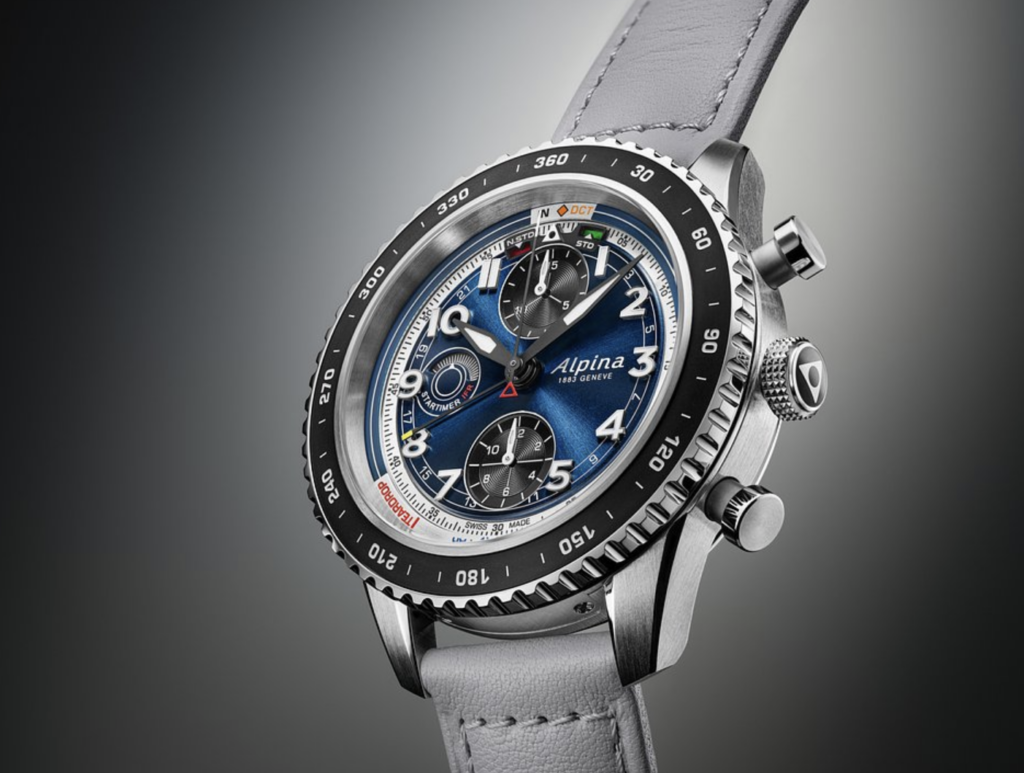
A fully-fledged aviation instrument As well as introducing a never-before-seen function, the Watch Angels x Alpina Startimer Pilot IFR Chronograph brings together the three defining pillars of mechanical flight instruments: Action: a unique mechanical function enabling the wearer to instantly determine the correct entry into a holding pattern and how to fly it; Measurement: an integrated chronograph with 15min and12-hour counters, crucial to time holding pattern legs, monitor longer phases of flight, and to support time-speed-distance and consumption calculations; Reference: a second UTC/24h hour hand to keep track of the world-wide aviation time that allows pilots, controllers, and dispatchers to operate according one consistent timing globally, eliminating confusion from time zone changes and local daylight saving.
From a known input to a mechanically calculated output The timepiece’s bidirectional 360° compass bezel and a purposely developed inner multilevel turning case component that function independently and in conjunction with each other during operation – allow the pilot to enter two pieces of know data: the heading to “the fix” of the holding pattern (from the plane’s heading indicator) and the inbound course (from the flight chart). The watch then instantly provides the following information: The type of entry in the holding pattern (direct, parallel or teardrop) All the required holding pattern headings and courses to fly it correctly
An intuitive colour code visible through the dial apertures at 12 o’clock, ensures information can be read off instantly and unambiguously. This operational data, and the comprehensive set of aviation functionalities, makes the Watch Angels x Alpina Startimer Pilot IFR Chronograph one of the most complete pilot’s watches ever designed.
Translating an IFR procedure into a watch IFR vs VFR In the aviation world, there are two different types of standard flight rules. One is VFR (Visual Flight Rules), the type of flight practiced by almost all private pilots. VFR flight, possible when visibility is adequate, requires pilots to be able to fly their aircraft based on visual data with the aid of basic instruments (a radio, a chart and a compass). The second type of flight is IFR, standing for Instrument Flight Rules. IFR takes over where VFR is no longer possible or in more complex flight environment such as cross-border flights, approaches to major airports and flights carrying passengers.
IFR flight is a major component of a professional pilot’s licence and is always applied to holding patterns even if visibility is adequate.
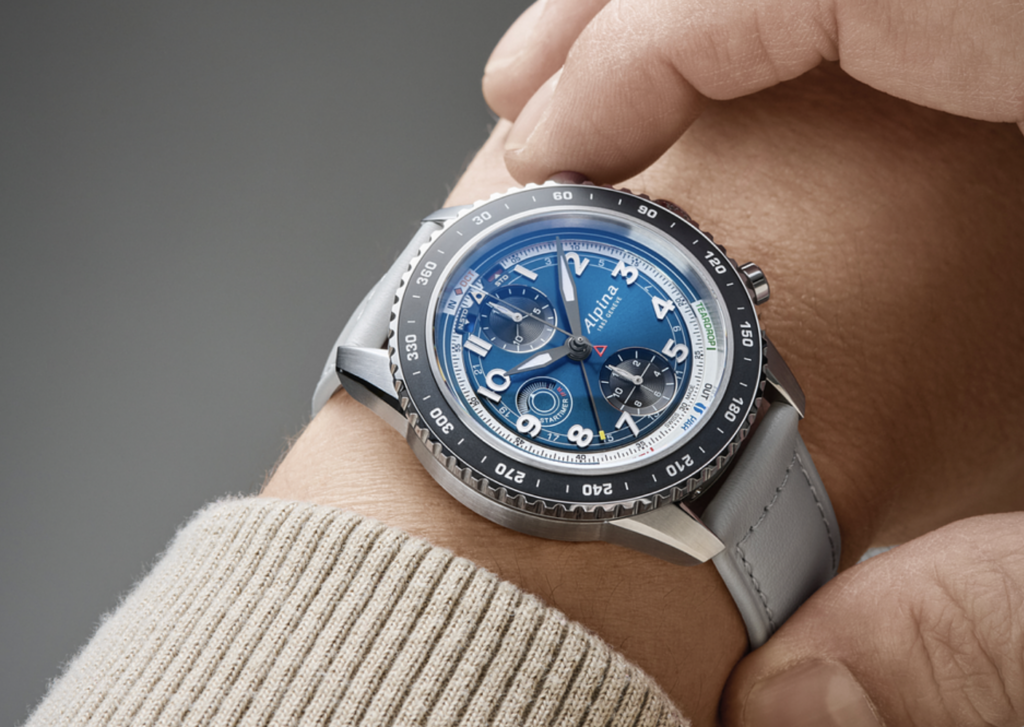
A critical phase of IFR flight: the approach and the holding pattern the most demanding aspect of IFR flights is the approach. The technique involves adjusting the aircraft’s flight to the environment of the destination airport, taking into account natural features, existing infrastructure details and most importantly, other air traffic bound for the same destination. IFR approaches are governed by strict procedures designed to safely control air traffic around an airport.
A holding pattern is a predetermined, oval loop-shaped flight path that an aircraft flies while waiting for clearance from Air Traffic Control (ATC) to proceed. It serves as an aerial “traffic light” for airplanes, allowing them to safely wait in a designated airspace when they cannot land due to congestion, poor weather, or an ongoing emergency.
From standard procedure to mechanisation While each airport has its own holding patterns, the procedures for entering them are standardised, a little like motorway slip roads: each is different, but the process of joining the motorway is almost always the same.
Anywhere in the world, from New York to Tokyo, from Geneva to Dubai, the procedure follows the same standardised IFR logic. The geometry is fixed, the rules are fixed, the sequence is fixed, and most importantly: the two key input variables are always known.The inbound course is published on the flight chart and the heading is immediately available from the aircraft heading indicator.
This repeatable procedural structure is what made it possible for Watch Angels and Alpina engineers to mechanically translate it into watch.
In fact most procedures can never become mechanical watch complications. They involve too many changing variables, too many external inputs and too much unpredictability.
The holding pattern and the watch The point at which an aircraft enters a holding pattern depends on the direction from which it approaches (the east, the north, the south or the west); this direction is expressed in degrees and is known as the heading.
Once this heading is known, pilots will have to enter the hold in one of three ways: a direct entry, a teardrop enrty, or parallel entry. A hold may involve right turns (Standard) or left turns (Non-Standard), and is entered at a point known as the fix, a known location shown on IFR flight charts.
The Watch Angels x Alpina Startimer Pilot IFR Chronograph enables a pilot on approach to use the watch bezel, dial ring and dial, to gain a clear picture of the holding pattern and how to fly it.
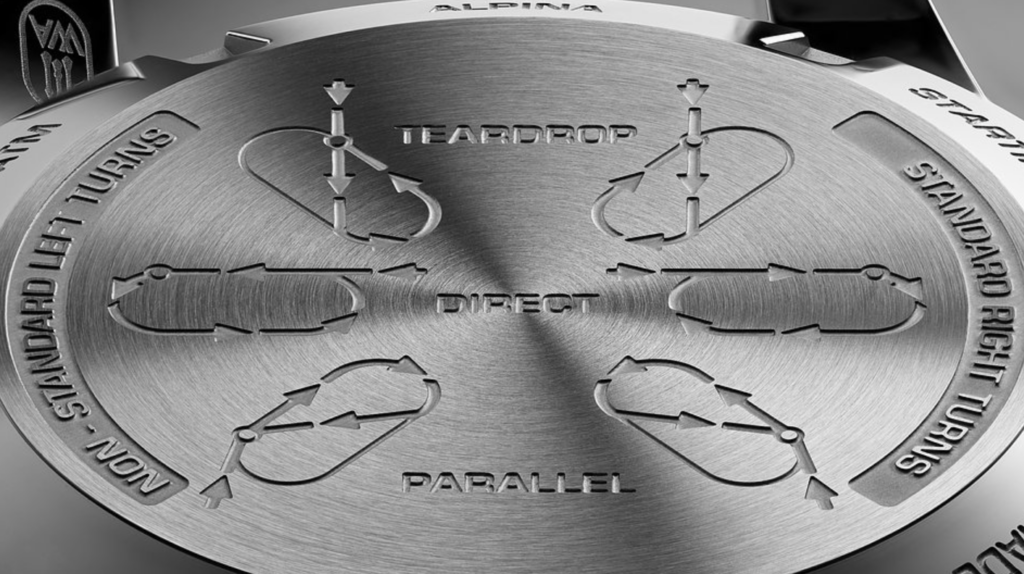
On this watch, the pilot uses a simple two-step process involving just the bidirectional bezel to correctly fly a holding pattern.
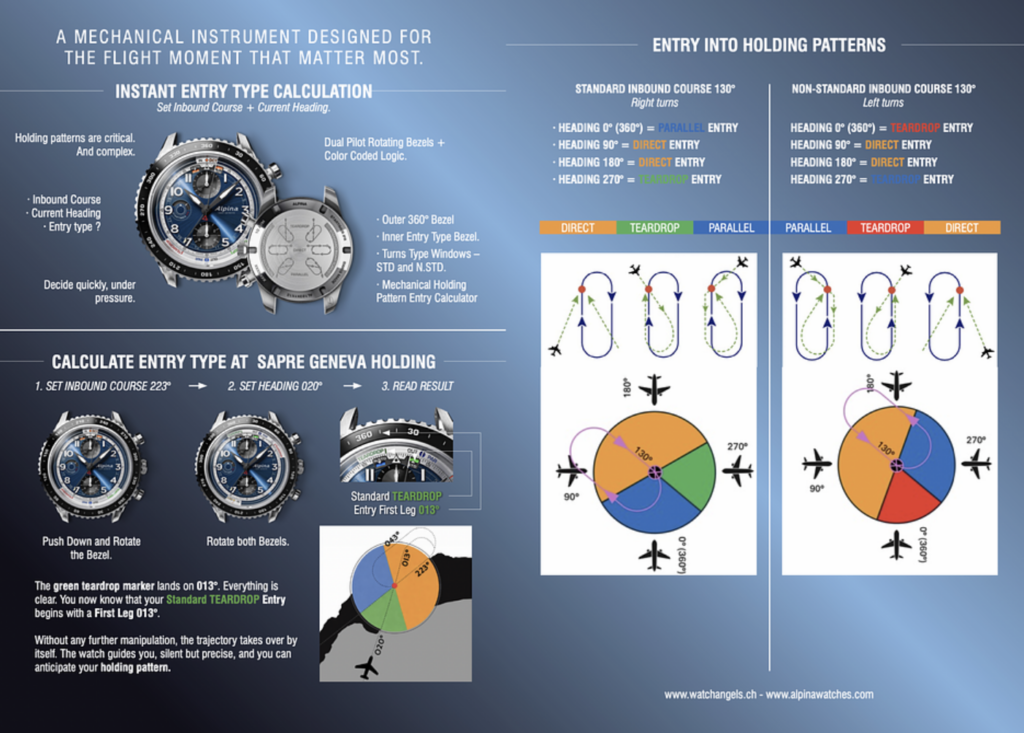
First step: the pilot sets the inbound course which he reads on his flight chart by pressing down the bezel in the bottom position and aligning the degrees of the inbound course on the bezel with the orange diamond shaped outbound indicator on the turning dial ring.
Second step: the pilot sets the heading (to the holding pattern fix) which he reads on his heading indicator by releasing the bezel in the top position and aligning the heading degrees on the bezel with the heading indicator triangle at 12 o’clock. Nb. during this operation the bezel and the inner ring turn together.
After setting these two parameters and reading the type of holding pattern for the airport (standard or non-standard) from the flight chart, the watch automatically displays all the information the pilot requires to execute the holding pattern:
The type of entry required: direct, teardrop or parallel. The pilot reads this information in the two apertures at 12 o’clock: orange for direct, red for teardrop and blue for parallel;
All courses and headings to fly the hold: outbound course, inbound course, heading to fix, and first leg heading.
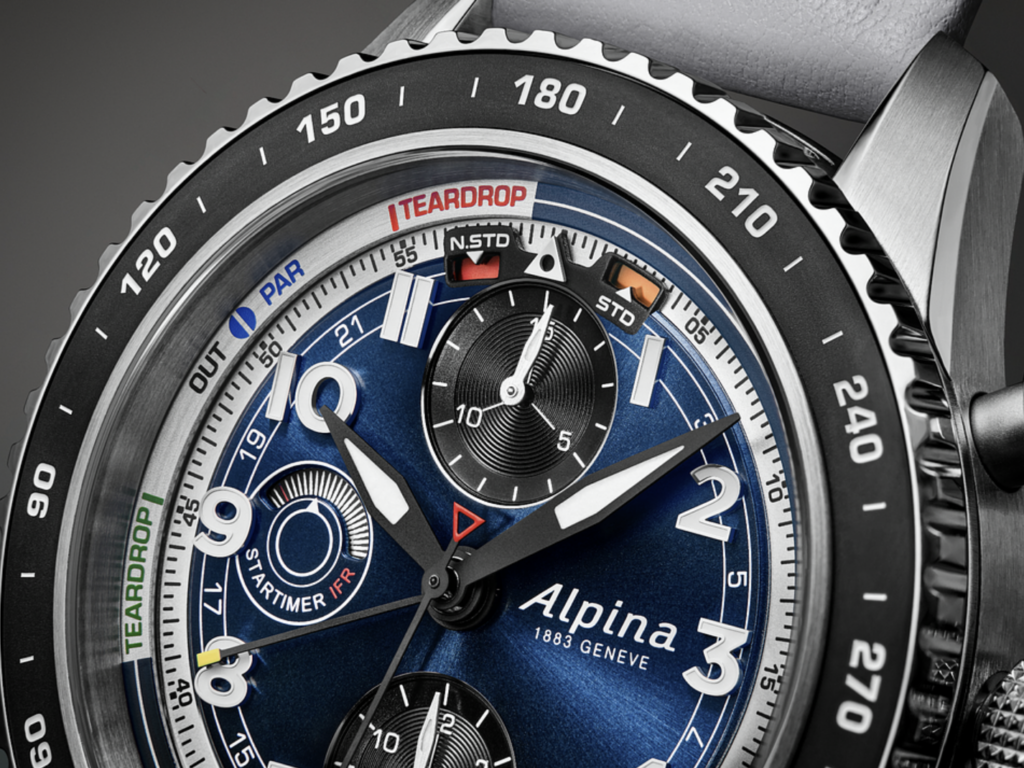
Ingenious construction the particularity of this system is that it is fully mechanical and that it resides in the case components, a so called “habillage complication”. The entire calculation and display system is housed in the case body, a push-release coupling bezel, dial ring and dial and is powered by two connected turning components, the bezel and an inner multi-level component which serves as a dial ring and also as an entry pattern calculator below the dial.
The case design adopts the style codes of the new Startimer collection launched in 2026 at Watches & Wonders. All the edges of the case are bevelled between the lugs and where it joins the frame; the lugs and frame themselves feature vertical satin polishing, while the bevelling is mirror polished. The blue sunburst dial features hand-applied luminous polished Arabic numerals and a running indicator by disk at 9 o’clock.
Like any pilot’s watch worthy of the name, it displays local and UTC time (the latter being used in all air traffic communications) and features a chronograph, essential for timing holding pattern legs, and all other aviation time-speed-distance-consumption calculations.
“This collaboration with Alpina is a natural continuation of our philosophy at Watch Angels: applying rigorous R&D to the functional side of mechanical watchmaking, with particular attention to case and case component engineering . By translating the logic of holding patterns into a mechanical logic, we have created a pilot’s watch that is not only inspired by aviation, but actually shaped by it.” Guido Benedini, CEO Watch Angels.
Developed by Watch Angels in partnership with Alpina, just 300 of this limited edition will be produced, encapsulating the essence of aviation in a piece of Swiss watchmaking excellence. Time measurement, spatial orientation and redundancy are all fully mechanical here. Directed at private pilots and avgeeks everywhere, the watch is much more than a timepiece; it’s a genuine collector’s item, the embodiment of a real step forward in pilots’ watches: not so much inspired by aviation as directly derived from its actual requirements.