VOLVO PENTA AND AUS SHIPS COLLABORATE ON AUSTRALIA’S FIRST ELECTRICALLY DRIVEN PASSENGER FERRY
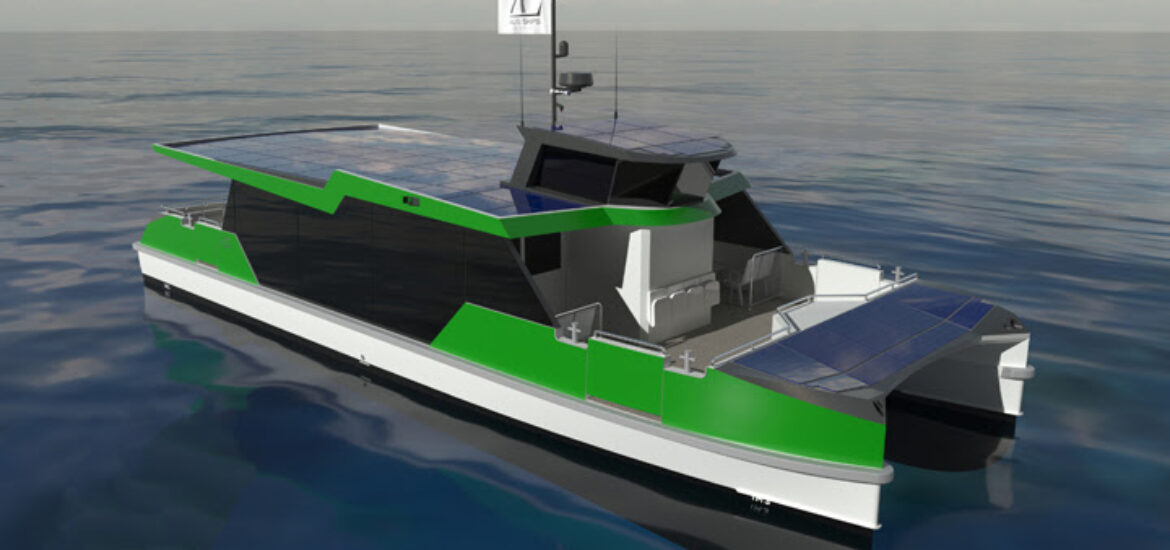
In a significant step forward for sustainable marine transport, Aus Ships and Volvo Penta have announced a landmark collaboration to develop Australia’s first 100% electric drive passenger ferry. Currently under construction, with commissioning due to be complete in Q4 2026, after which the vessel is scheduled to be used as a demonstrator before it goes into operation.
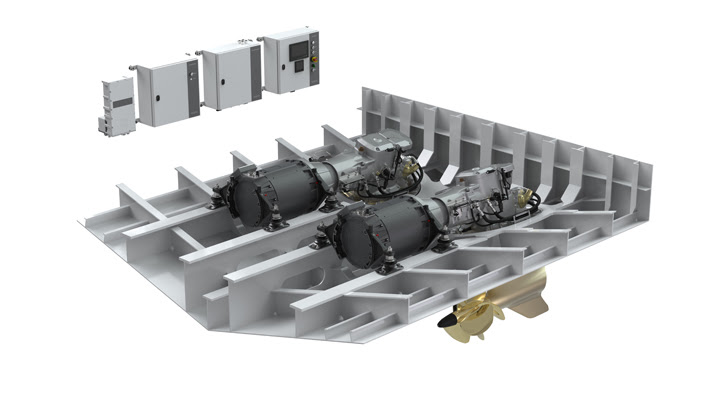
Pioneering Volvo Penta IPS450E electric propulsion system the pioneering vessel will feature a twin installation of the Volvo Penta IPS450E electric propulsion system, delivering 250 kW per driveline making it the first vessel globally to enter the market with this configuration. The ferry will combine a large onboard battery pack of 460 kWh with solar panels, creating a flexible and efficient energy ecosystem designed for real-world commercial use.
At its core, the project serves as a demonstrator to advance understanding of electric propulsion in marine environments. To support extended operational capability during its demonstration phase across Australia, the first vessel will also incorporate a Volvo Penta D4 variable-speed genset as a range extender. With operators increasingly seeking predictable lifecycle costs across construction, service and maintenance, the initiative is designed to generate valuable real-world operational insights and support the scalable adoption of electric propulsion solutions.
Philippa Wood, Head of Volvo Penta Oceania, says: “This project represents a bold step towards low-emission transport in Australia. What we’re doing here goes beyond deploying new technology – it’s about validating a complete, integrated solution that delivers efficiency, reliability and confidence for operators. With our Electric IPS platform, we’re carrying decades of proven marine innovation into the electric era, combining performance with efficient, quieter propulsion.”
She continues: “In this installation, we’re using twin IPS450E electric drivelines, each delivering 250 kilowatts of power. The aim is to allow the vessel to operate using renewable energy sources with improved efficiency – while maintaining performance. For Volvo Penta, this is about more than a vessel. It’s about validating scalable electric marine propulsion solutions for Australia’s waterways.”
The Volvo Penta Electric IPS system integrates propulsion and control into a unified platform, enhancing manoeuvrability, energy efficiency and ease of operation. Built on more than 20 years of IPS heritage, it leverages forward-facing propulsion and advanced Electronic Vessel Control (EVC) to optimize energy use and extend range, supporting the transition toward decarbonized marine operations. The helm experience delivered by this system also gets a real lift thanks to 8-inch Type Approved Displays (TAD), as well as heavy duty control levers and joystick control. Furthermore, in electric mode the same features such as low-speed, joystick docking and the Volvo Penta Dynamic Positioning System (DPS) are available for full control.
Tommy Ericson, Director of Aus Ships, says: “From a ship designer’s and builder’s perspective, integrating this level of propulsion and control capability into a commercial passenger vessel opens new possibilities for both efficiency and passenger experience.”
Australia planning future with electric passenger ferries Aus Ships, a long-established Australian shipbuilder with a strong track record in constructing high-speed catamarans, including the CityCats for Brisbane, brings deep local expertise to the project. The company is currently under contract for fleet replacement programs through 2029, positioning it as a critical partner in scaling future electric vessel deployments. Together, the partners in this project aim to stimulate interest in electrification and accelerate the shift toward zero-emission transport solutions in Australia.
The project is also supported with an AUD 2 million grant from the Australia-Singapore Low Emissions Technologies (ASLET) initiative, which is funded by the Australian and Singaporean governments and is co-delivered by Australia’s national science agency, the CSIRO and the Maritime Port Authority of Singapore. The funding supports the development of maritime decarbonization solutions while strengthening regional industry capability and accelerating emissions reduction.
Dr Fiona Scholes, ASLET Program Manager at CSIRO, Australia’s national science agency, comments: “Collaboration is so important in bringing new technologies to market. Marine transport is one of the most challenging sectors to decarbonize, but this project will demonstrate that clean marine transport is possible in Australia. Demonstration projects like this generate real-world operating data on performance, reliability and cost – helping to build the evidence base needed to support wider adoption.”
Beyond delivering a single vessel, the project is designed as a scalable platform for future deployment across Australian waterways. Long-term ambitions include the development of a fleet of similar ferries serving key routes along the east coast, including Brisbane and Sydney.
Tommy Ericson, Director of Aus Ships, says: “We see this as a defining moment for the Australian marine industry. By combining our shipbuilding experience with Volvo Penta’s advanced electric propulsion technology, we are not only delivering a first-of-its-kind vessel – we are also laying the groundwork for a new generation of sustainable electric passenger ferries. This is about creating a scalable model that can be replicated across the region.”
Volvo Penta’s hybrid and electric marine offering continues to grow from a technical perspective, progress is well underway. Volvo Penta IPS drives have already been delivered, with additional electric components arriving in the coming months and the majority of hardware expected on site by July.
The collaboration also reinforces Volvo Penta’s broader electrification strategy. As the company continues to expand its hybrid and electric marine offerings, momentum is expected to build significantly through 2026 and 2027.
“This collaboration validates the direction we are taking as an industry,” William Bratt, Director of Sales and Marketing at Volvo Penta Marine says. “Electrification is no longer a future ambition it’s happening now. By working closely with partners like Aus Ships, we’re enabling a transition that benefits operators and society alike through reduced emissions, quieter waterways and more sustainable urban transport systems.”
Together, Aus Ships and Volvo Penta are not only advancing Australia’s journey toward zero-emission marine transport they are helping define what the future of sustainable passenger mobility at sea will look like.