THE ZERO DESIGN STORY
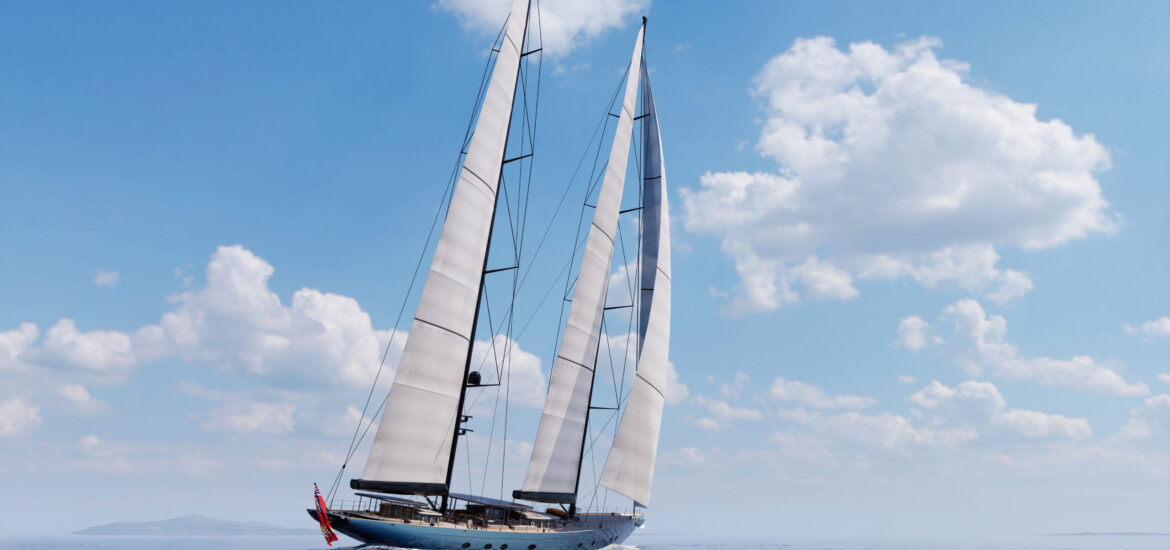
Like the black-browned albatross that inspired the feathered boot stripe carved into her metallic blue hull, Zero is a yacht that exists in solitude. For six years, a tight-knit group – led by extraordinarily visionary owners has pushed the design and build of a pioneering all-electric sailing yacht into uncharted territory. A fresh approach to renewable energy management. A new understanding of what it means to be sustainable. And an original take on how to wrap holistic design around the owners’ needs. The role of Dutch studio Vripack Yacht Design, which penned the interior and exterior, as well as technical design in collaboration with Dykstra Naval Architects, was to translate these requirements into a comprehensive and elegant design language underpinned by state-of-the-art technology.
Vripack is renowned for its holistic design, but Zero redefines the boundaries. As a first of her kind built around energy generation, not consumption, “it all began with the technology, but we knew she also had to be beautiful,” says Marnix Hoekstra, Vripack’s co-creative director. By that, he means a classically good-looking sailing yacht with myriad contemporary design solutions woven into the very fabric of the yacht.
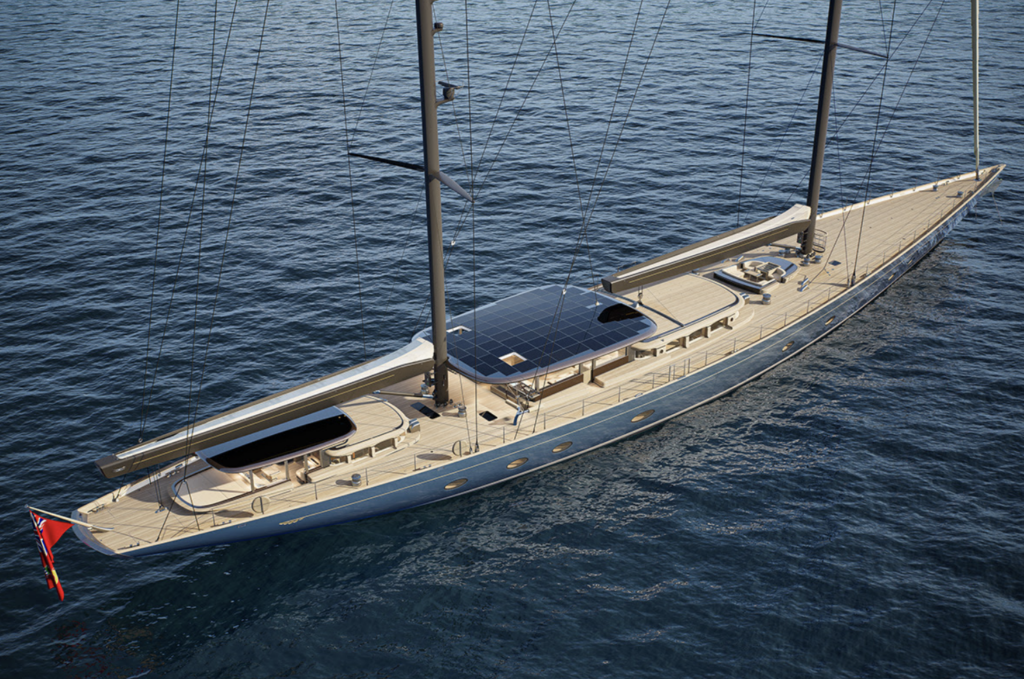
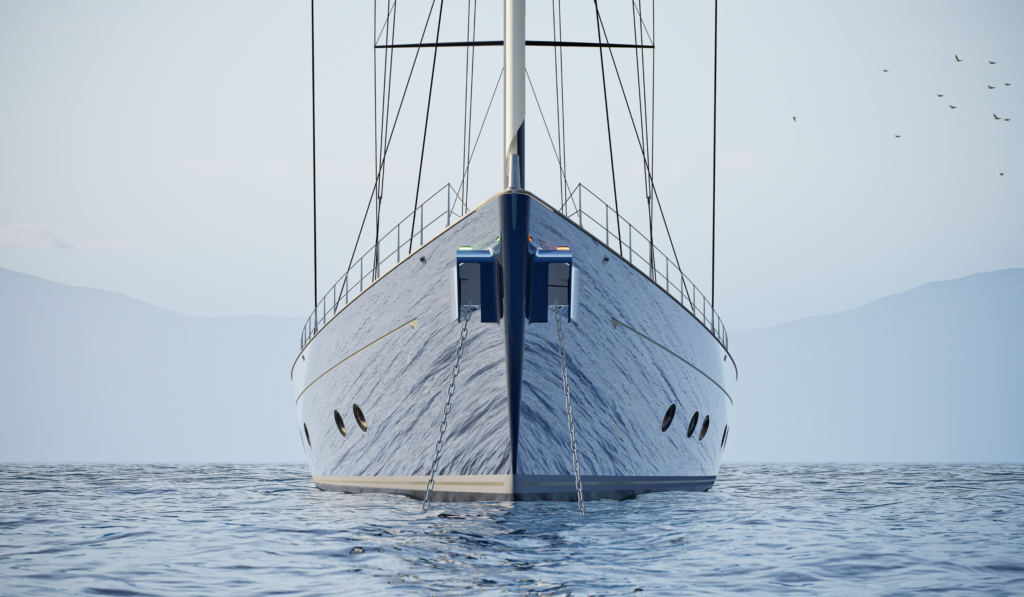
First came the sustainability driver – the ability to sail in comfort for up to two weeks solely on renewable sources without using fossil fuels using uniquely designed regenerative systems, including turbine propellers for hydro-generation. Input from Emirates Team New Zealand America’s Cup syndicate to refine the hull for peak sailing performance resulted in a distinct topside curvature that, according to CFD tests, delivers a 2.5% gain in speed – providing an 8% increase in electric power generation. Covering the biminis is 100sqm of PVT (photovoltaic thermal panels) producing both electrical energy, and thermal energy used to heat and cool the yacht. It’s underpinned by a 700-volt DC grid and monitored from a mission control room.
The fundamental design challenge was how to make a yacht shaped by physics and data feel timeless and beautiful. Vripack’s answer was a deliberate rejection of repetition and off-the-shelf detailing seen in traditional sailing yacht design, while delivering on the owner’s love of classic sail boats. “As a designer, it’s exciting to be able to say there’s still more to explore here,” says Hoekstra. “On a design level, Zero is hugely special because nothing like this has been done before.”
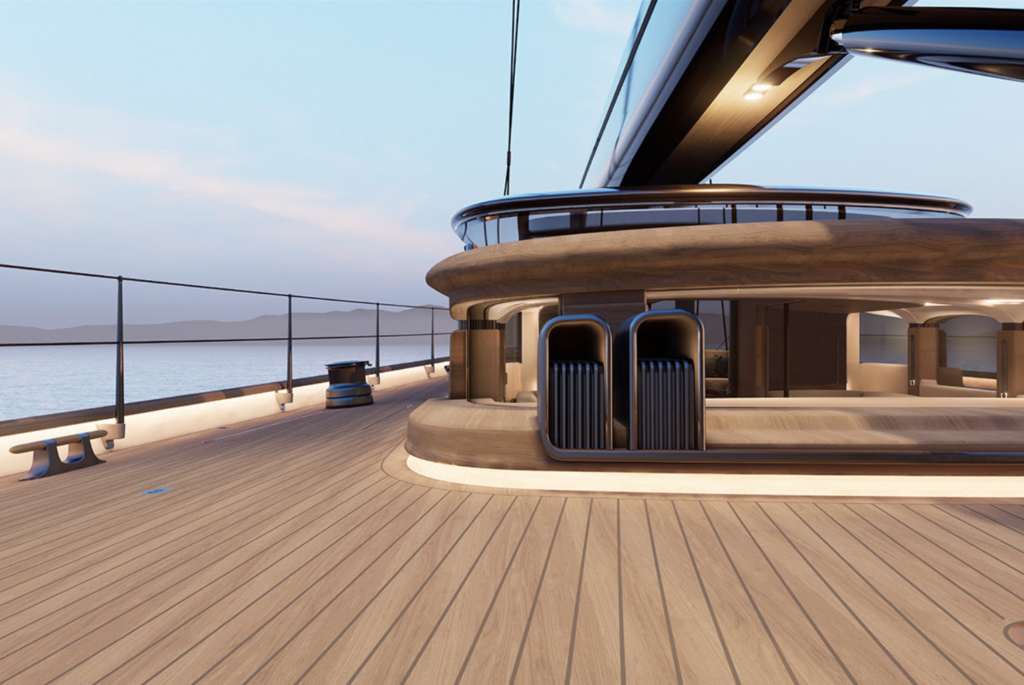
From a distance, the yacht stands out for her long double-sided overhangs, twin towering masts, and a superstructure that demands attention with its low, fluid profile. Up close nothing is standard, from the spoon bow, and matte-finished custom deck hardware (including stanchion bases, tapered receptor holders, and bespoke beet-metal fair leads), to the metal stern cap that abruptly ends the classic line. A metal transom hand-painted in wood-effect adds flourish. Even the passarelle doubles as the owner’s private transom ladder for morning swims, engineered to swivel, rotate flat and remain slip-proof once wet. The design process married old with new, blending artisanal expertise and centuries-old craftsmanship with 3D printed elements, AI-assisted artistry and a full VR mock-up of the yacht. For Hoekstra, each ingredient had had to answer three core design needs – to serve its intended purpose, to seamlessly integrate into the overall design, and to look undeniably beautiful.
This ethos is reinforced by Vripack’s strict unifying design language in which all elements begin or end in a full radius. It extends to joinery, windows, furniture geometry and spatial transitions, and is evident in the curved structural glass of the caramel-hued Brazilian FSC-certified teak superstructure that seems to grow organically from the wooden Tesumo decking. It’s also found in the hand-carved double-curved interior oak corners and gently cambered ceiling light fittings.
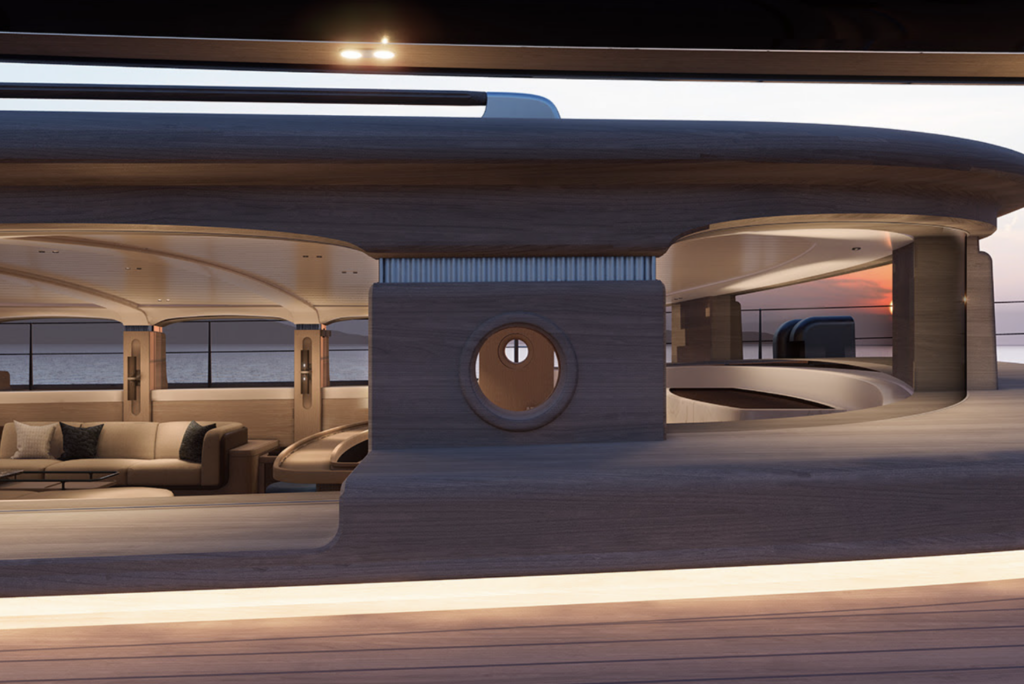
“Each element connects seamlessly to the next and the beauty of our work lies in these connections,” explains Hoekstra. “They’re what give Zero her sense of calm and cohesion. It’s not overdesigned; every detail simply answers to the same rhythm.”
If geometry is Zero’s backbone, nature is her soul. Polished surfaces and shiny finishes are shunned in favour of natural textures and materials that feel rooted in the earth. Examples include the raised leather effect of the multihued fire onyx coffee table top in the Californian Lounge – a space that also serves as a guest work area and an overflow cabin. Then there’s the use of scented ‘pine skin’ on custom furniture crafted out of bark reclaimed from timber production waste, and the insistence on sourcing local, sustainable materials, such as smoked European oak.
Unlike most yacht interiors that reject blemishes and faults, aboard Zero it’s the deliberate knots, cracks and grain variations that celebrate nature and inject life into the project, as do the slabs of “leathered” stone used throughout the ensuites, complete with visible cut lines. “The owners, who love the outdoors, wanted nature to truly resonate throughout the yacht,” says Hoekstra. “We had to let the carpenters know it was imperative that the veneers really show the natural grain of the wood.”
This material-saving approach allowed them to use 70% of the oak veneer – hand-selected by Vripack – compared with the typical 30% used during a yacht build. Yet, Zero represents more than a commitment to sustainability. She is a living, breathing work of art that solidifies Vripack’s finely tuned owner-focused approach.
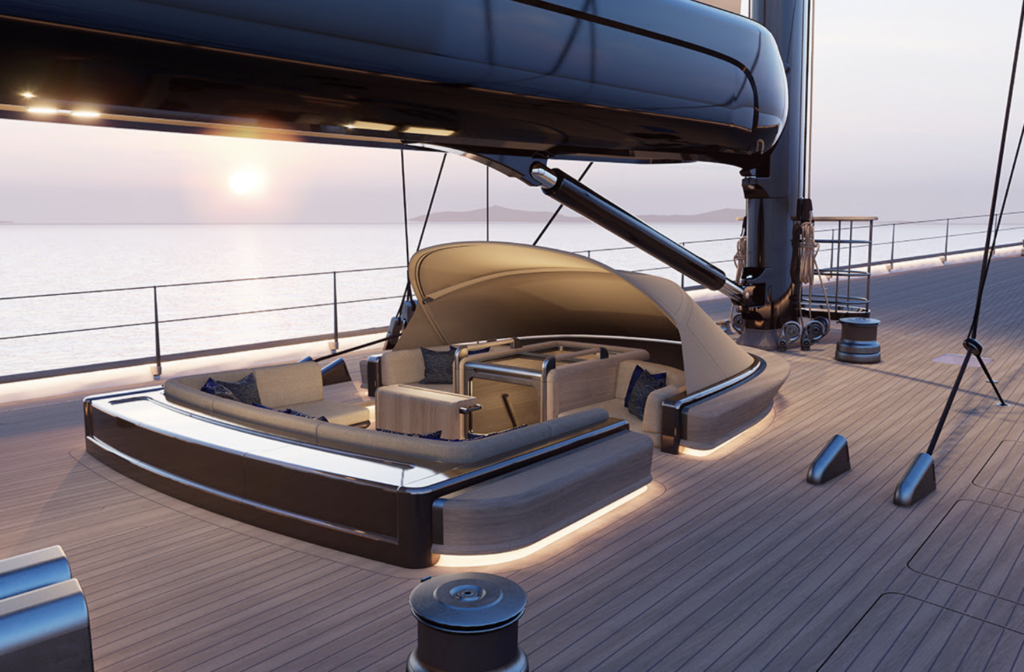
“We visited the owners’ homes and listened carefully to their needs to better interpret what they wanted from this design,” says Hoekstra, “and that was elegance, comfort and independence.” He cites the outdoor modular furniture in the main cockpit as a case in point. “The dining area on their previous yacht took a lot of time for the crew to set up, so we designed loveseats and tables on castors that lock together quickly and efficiently, giving them an outdoor space that functions both as lounge seating or as a formal dining arrangement for four, eight or 12 guests.” It’s complemented by electric cockpit windows that operate at the push of a button, “so if a squall comes in, the owners can quickly seal off the area themselves without having to call for crew.”
Other personalised conveniences finetuned for onboard life include the abundance of storage, in both guest and crew areas, as well as grab rails for non-seafaring guests and surface cutouts for custom-fitted trays when sailing on a heel. The main salon has an indoor dining table that doubles as a craft table for the owners who love to puzzle. The space freed by eliminating a full-beam engine room has been repurposed into a secret passageway providing discreet access for crew service, while all four guest cabin themes are inspired by places of significance to the owners, from Italy to French Polynesia. The owner’s suite, which pivots around the mizzen mast – itself wrapped in a custom artwork by American sculptor Sienna Martz – leads to a private study for when ‘working from yacht’ during the months they hope to spend onboard.
Built at Vitters Shipyard in The Netherlands, and due to launch in summer 2026, Zero brings the owners’ vision and Vripack’s design prowess together in a project set to redefine what it means to breathe life into high performance sailing.
“This project proved to be the perfect storm for Vripack and our integrated design philosophy,” says Hoekstra. “The owners entrusted us with a lot of freedom and respect for the choices we made, and the result is a beautiful and capable yacht designed as a single continuous object, not a collection of parts. And therein lies the win.”