TAG HEUER REINVENTS ITS SQUARE ICON, INTRODUCING THE NEW TAG HEUER MONACO CHRONOGRAPH
More than half a century after its debut, the celebrated TAG Heuer Monaco enters its next chapter with a new more
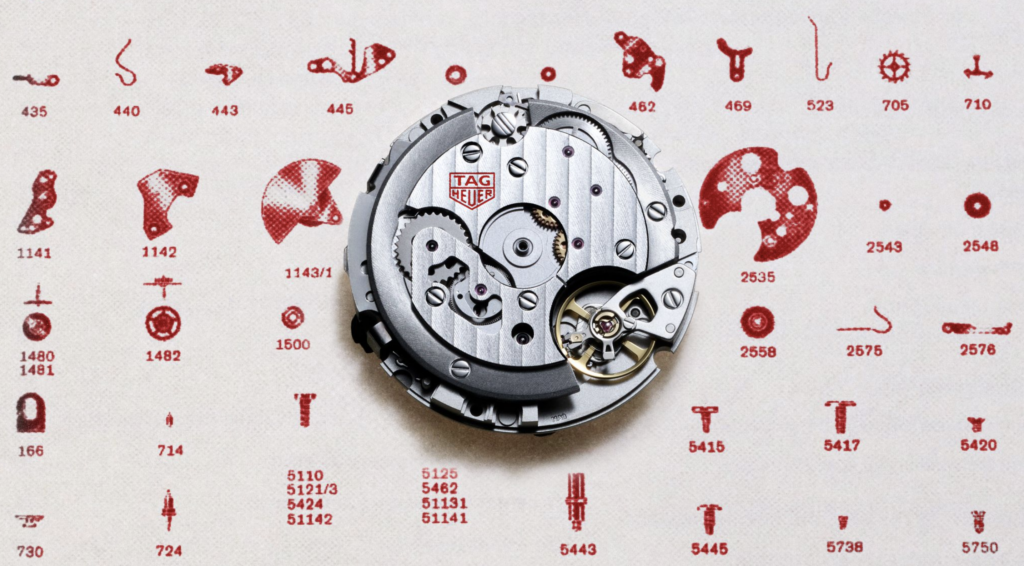
ergonomic design, elevating comfort and refinement, and now powered by the in-house automatic Calibre TH20-11.
Since 1969, the TAG Heuer Monaco has left an indelible mark on the watchmaking industry. As the first square, water-resistant chronograph wristwatch powered by the first commercially availabl automatic chronograph movement, the Calibre 11, it was unlike anything else at the time. As a platform for avant-garde design and innovation, the TAG Heuer Monaco has always made a powerful statement throughout its history. Today, TAG Heuer redefines its squareicon with an entirely new case design. Drawing inspiration from the original reference 1133 launched more than 50 years ago, this new generation enhances the TAG Heuer Monaco’s signature shape with dynamic lines, offering improved ergonomics while reinforcing its contemporary character.
A Pivotal Moment In the mid-1960s, the world began to move away from manual-wind mechanical watches that required daily winding to power the movement. The rise of automatic watches introduced a new level of convenience. Wearers quickly grew accustomed to the natural motion of the body providing energy to their
timepieces.
For Heuer, this shift presented a challenge. The Maison was exclusively producing chronograph wristwatches, and no self-winding caliber capable of recording elapsed time yet existed. In collaboration with partners across the watchmaking industry, the plan known as “Project 99” was launched to conceive and produce the first automatic chronograph movement.
Using a micro-rotor winding base caliber from Buren and a chronograph module from Dubois-Depraz, the now-celebrated Calibre 11 made its debut on 3rd March 1969 and became commercially available soon afterwards. Technical requirements related to the integration of the base movement and module meant that the crown had to be positioned on the left side of the case. This necessity was transformed into a defining feature. It served as a practical reminder that the watch no longer required daily winding, while also improving
ergonomics and functionality.
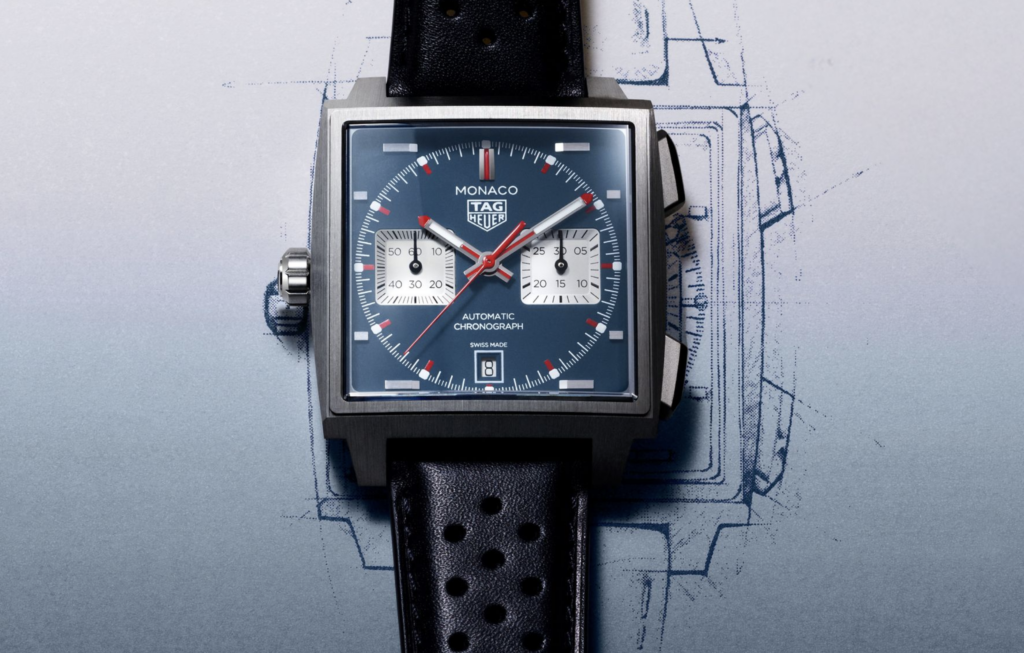
Such a revolutionary movement called for an equally revolutionary timepiece. Alongside the TAG Heuer Autavia and TAG Heuer Carrera collections, which had already been introduced a few years prior but were redesigned to accommodate the new movement, a visionary and futuristic model was introduced to mark this milestone: the TAG Heuer Monaco.
A Sensitive and Faithful Reinterpretation Since its inception, the TAG Heuer Monaco has stood apart. Its brushed and polished angular case, defined by sharp lines and striking geometry, immediately set it apart. The
use of bold colours, such as vivid blue, rare in watchmaking at the time, reinforced its distinctive character. When it was unveiled in 1969, it looked like nothing else.
While the general public did not immediately embrace its revolutionary design language, avant-garde creatives such as Sammy Davis Jr., Oscar Peterson, Stanley Kubrick, and, of course, Steve McQueen were among its earliest adopters. Although its initial production run lasted only five years, its relaunch in 1997 allowed the world to fully
appreciate the design language of the TAG Heuer Monaco.
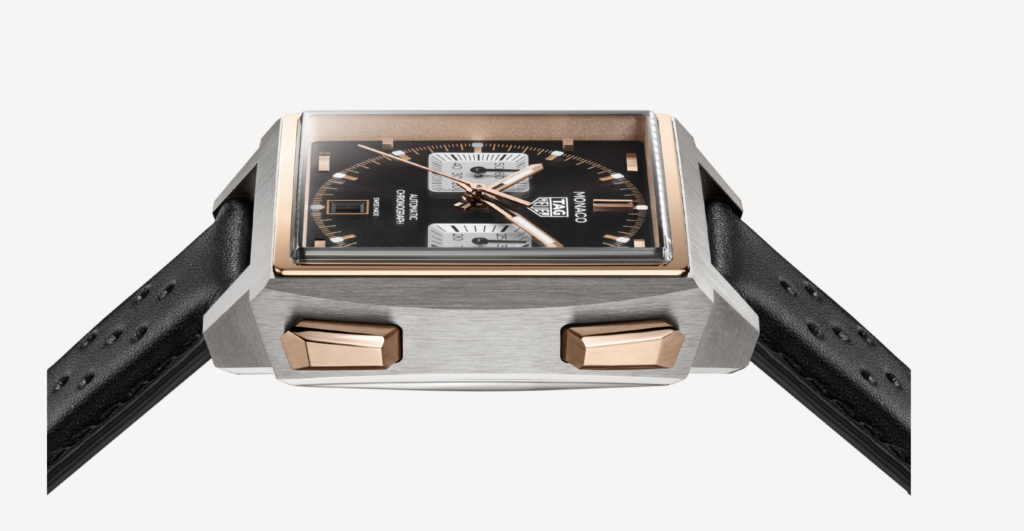
Today, it stands as one of TAG Heuer’s most emblematic models and a true pillar for the Maison. However, the design reintroduced in 1997 was, in many ways, an abstraction of the original TAG Heuer Monaco. Only a few elements were carried over, most notably its square shape. When the project began to redesign the collection in the lead-up to the launch of the TAG Heuer Monaco Split-Seconds Chronograph in 2024, the decision was made to return to the origin of the story and to the reference 1133. Many of these defining elements are now present in the new TAG Heuer Monaco Chronograph.
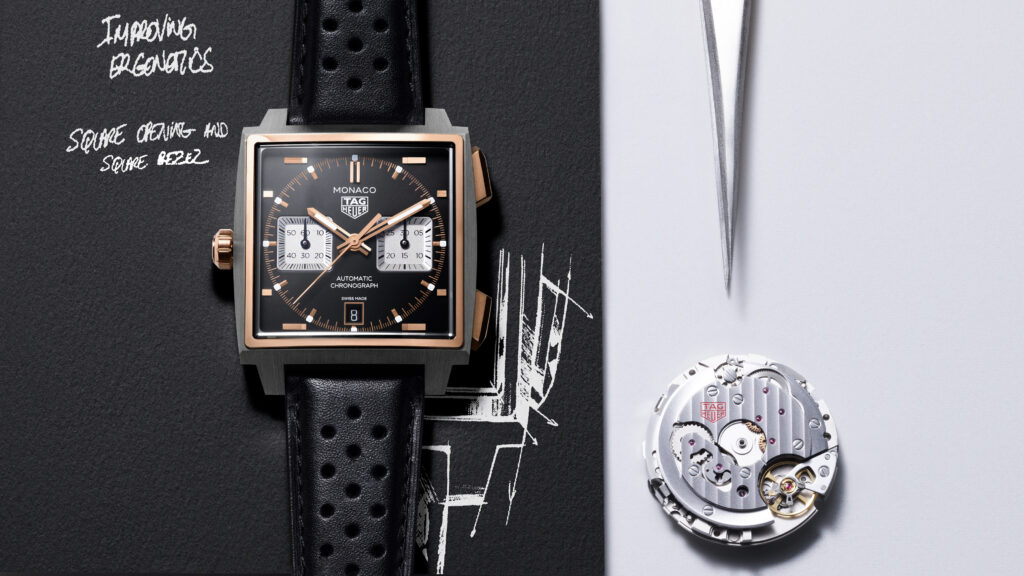
The sharp, angular edges have been reinforced. The sapphire crystal is now closer to a true square in form, while the 39 mm case, now crafted in grade 5 titanium, extends with gently curved sides. The caseback is a masterclass in ergonomics. A smaller round central section curves toward the edges, echoing a design feature of
the original while enhancing overall comfort. Extensive work has been undertaken to improve balance and wearability.
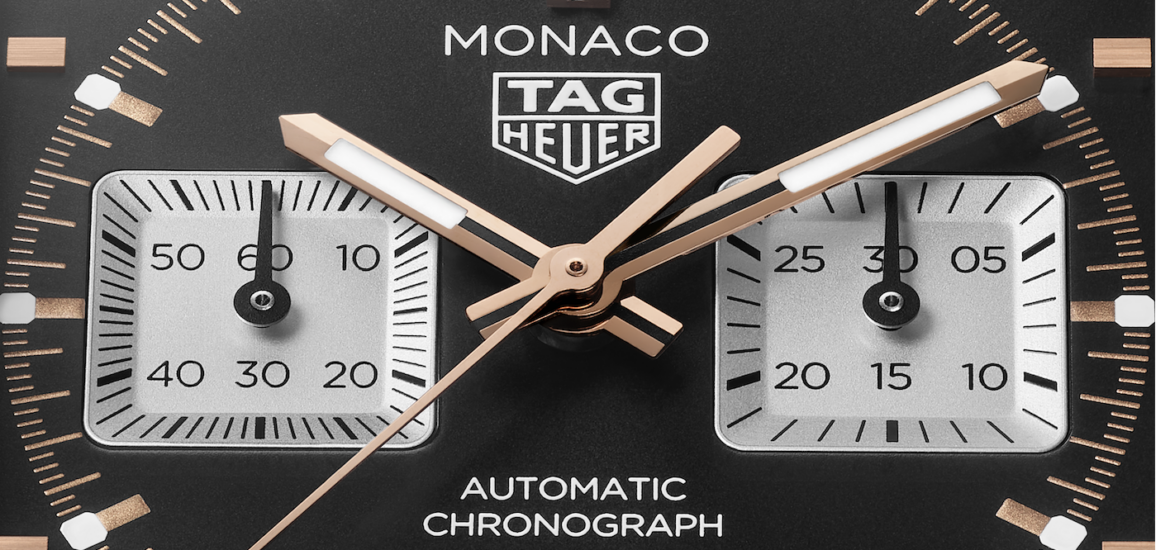
The dial has also been refined and elevated. Typography and text placement have been carefully considered to ensure absolute legibility. An interplay of shapes and applied elements enhance the overall design without detracting from clarity, while thecontrasting subdials and a combination of finishes introduce depth and character.
This new version is unmistakably a TAG Heuer Monaco, only more so. Presented in three colourways, the collection includes the signature TAG Heuer Monaco blue, directly inspired by the watch famously worn by Steve McQueen in his 1971 film Le Mans. A refined sunray-brushed and lacquered dark green version draws on the codes of classic British Racing Green. Finally, an elegant black model is housed in a two-tone case of grade 5 titanium and 18K 5N rose gold. Each is paired with a racing-inspired strap featuring a newly designed grade 5 titanium folding clasp.