FEADSHIP AND ATOMICONE JOIN FORCES TO BRING MXBUSTER TECHNOLOGY TO THE SUPERYACHT FLEET
Feadship has announced a strategic collaboration with Dutch technology developer AtomicOne to introduce MXBuster® combustion optimisation technology to superyachts over 30 metres, marking a significant step towards reducing emissions, improving fuel efficiency and advancing sustainable yacht operations.
The partnership follows more than a year of successful onboard operation aboard a Feadship yacht, demonstrating the technology’s potential to deliver measurable environmental benefits while offering a practical solution for both existing vessels and future superyacht designs.
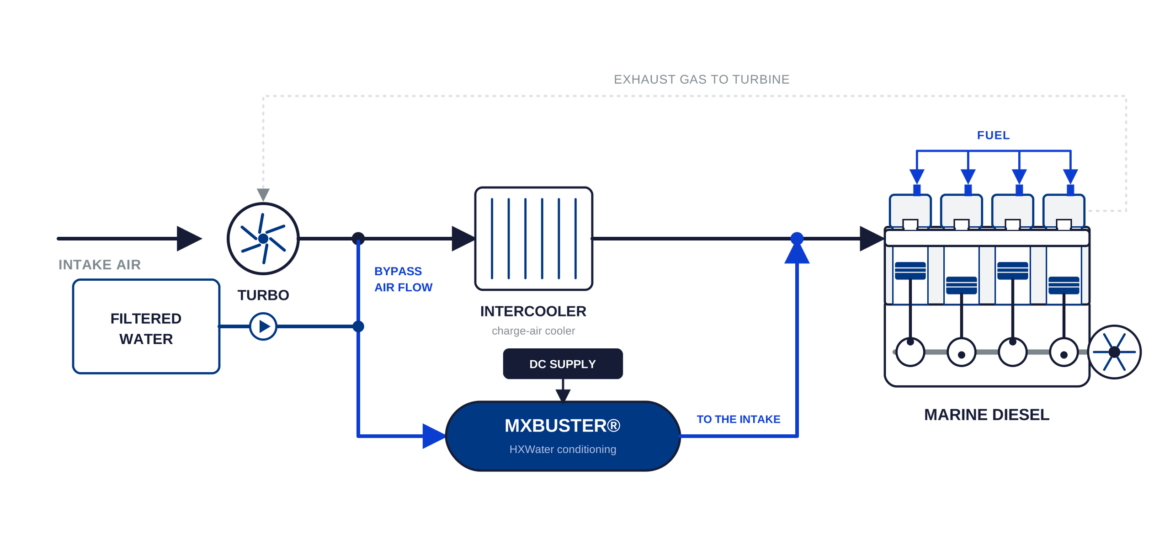
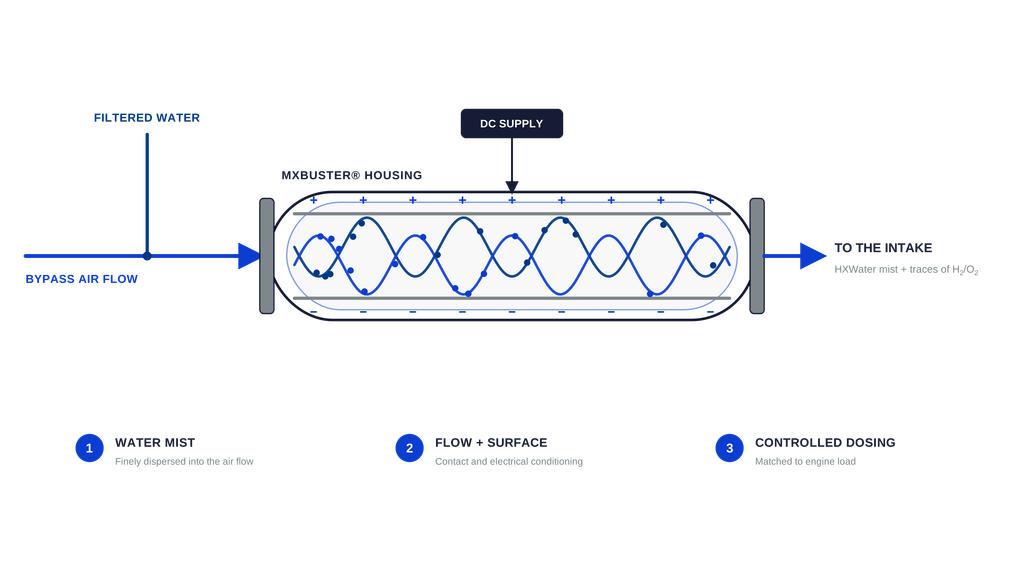
Developed by AtomicOne, MXBuster takes an innovative approach to emissions reduction by optimising the combustion process directly at the engine intake rather than relying solely on conventional exhaust after-treatment systems. The technology introduces hydrogen produced from purified water, together with conditioned water vapour, into the engine’s intake air, promoting more efficient combustion while reducing harmful emissions, soot formation and fuel consumption.
Independent testing and validation by organisations including Lloyd’s Register and SGS have demonstrated the technology’s performance on medium-speed marine engines and superyacht generator sets. Verified results include reductions of up to 55 per cent in nitrogen oxide (NOx) emissions, alongside lower exhaust gas temperatures and reduced particulate matter.
Designed as a compact, standalone system, MXBuster can be installed without modifying the engine itself. It is compatible with both conventional diesel fuel and hydrotreated vegetable oil (HVO), making it a flexible solution for yachts seeking to improve their environmental performance without extensive mechanical alterations.
Proven Performance Through Real-World Testing the first MXBuster installation aboard a Feadship yacht has now operated successfully for more than a year, providing valuable operational data and demonstrating the technology’s effectiveness under real-world conditions.
During this period, soot deposits have been eliminated and emissions reduced, while initial onboard measurements indicate the potential for improved fuel efficiency.
Additional testing on modern land-based diesel engines has demonstrated fuel-consumption reductions of up to 14 per cent, together with reductions of between 25 and 35 per cent in AdBlue consumption.
Following the successful onboard trial, Lloyd’s Register approved the technology for installation without affecting the engine’s certified configuration, further supporting its suitability for marine applications.
A Practical Solution for Existing Superyachts one of MXBuster’s key advantages lies in its potential to improve the environmental performance of existing yachts, particularly those equipped with Tier II engines.
Upgrading these vessels to meet more stringent emissions standards through conventional selective catalytic reduction (SCR) systems can present significant challenges, particularly where engine-room space is limited.
MXBuster’s compact design and minimal installation requirements offer an alternative approach to reducing emissions without the extensive structural modifications often associated with traditional exhaust after-treatment equipment.
“What makes MXBuster particularly interesting is that it has relevance for both existing and future yachts,” said Mattes Kruize, Director New Business & Supply Chain and a member of Feadship’s K&I Steering Committee.
“For many yachts with Tier II engines, conventional solutions for reducing emissions require considerable space and modifications to the engine room. MXBuster gives us another option to explore, while the technology also has the potential to influence how we design engine rooms for future Feadships.”
Shaping the Engine Rooms of Tomorrow beyond its potential for retrofitting existing yachts, MXBuster could also influence the next generation of superyacht engineering and design.
By reducing the space required for conventional exhaust after-treatment equipment, the technology could provide greater flexibility in engine-room layouts, potentially enabling more compact machinery spaces and preserving opportunities for single-level engine-room configurations.
As part of this broader vision, Feadship and AtomicOne are collaborating with Eindhoven University of Technology and specialist maritime partners through the Machine Room of the Future programme.
The initiative focuses on integrating advanced combustion optimisation with compact exhaust after-treatment technologies to achieve further emissions reductions while minimising the space, weight and complexity associated with conventional systems.
Advancing Sustainable Innovation Across the Superyacht Fleet as part of the collaboration, Feadship has secured exclusive rights to apply MXBuster and its associated technologies to yachts exceeding 30 metres in length.
The agreement creates new opportunities for technology-driven upgrades across the existing superyacht fleet while supporting the development of more efficient and environmentally responsible future vessels.
By combining AtomicOne’s combustion optimisation expertise with Feadship’s experience in superyacht engineering and innovation, the partnership represents a further step towards practical, scalable solutions for reducing the environmental impact of luxury yacht operations.
The collaboration reinforces Feadship’s commitment to exploring advanced technologies that improve operational efficiency, reduce emissions and support the long-term evolution of sustainable superyacht design.